

GHK-Cu, copper tripeptide-1, is the copper complex of the three-amino-acid peptide glycyl-L-histidyl-L-lysine, first identified in human plasma and studied in extracellular-matrix, collagen and gene-expression research. It is the largest single component in the Celyfe GLOW and KLOW pens at 75mg per 3ml cartridge, both on sale now. This page covers its chemistry, how the pens carry it, why the copper complex shapes handling, and how it compares with BPC-157.
What is GHK-Cu?
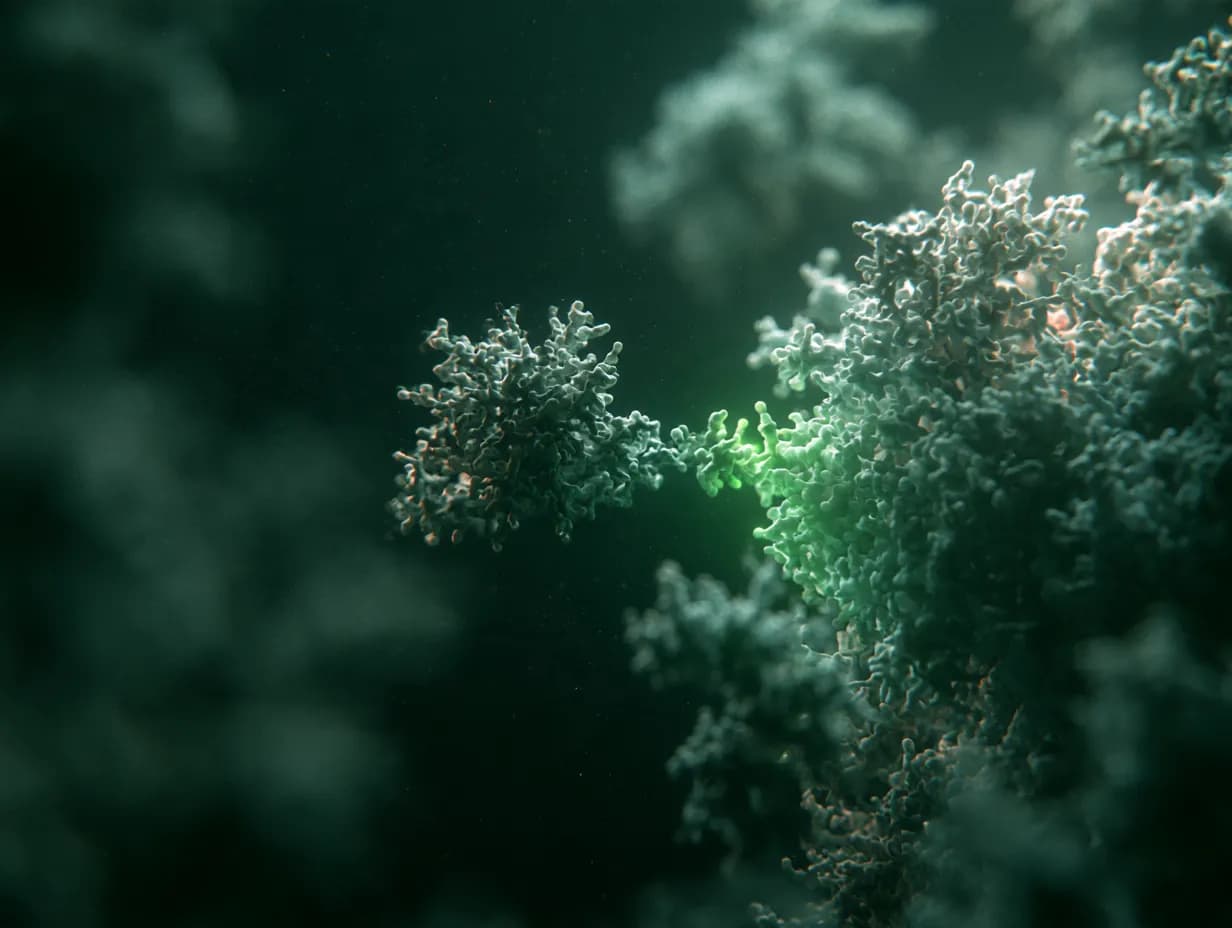
GHK is a tripeptide of glycine, L-histidine and L-lysine, named from the single-letter codes of its residues. It has a strong, specific affinity for copper ions, and GHK-Cu is the complex it forms with Cu2+, bound through coordination bonds from the histidine side chain and the peptide backbone. PubChem lists the complex under CAS number 89030-95-5 (CID 71587328) as C14H23CuN6O4+, molecular weight 402.92 g/mol; the free peptide GHK is C14H24N6O4, 340.38 g/mol. It is also known as copper tripeptide-1.
The copper-bound form is the unit of study in most of the published literature, rather than free peptide plus free copper. That is a structural chemistry point that affects experimental design: researchers generally treat the complex itself as the compound, which is why Celyfe supplies it as the complex. The guide What is GHK-Cu? explains the coordination chemistry in more detail.
How GHK-Cu is used in the Celyfe system
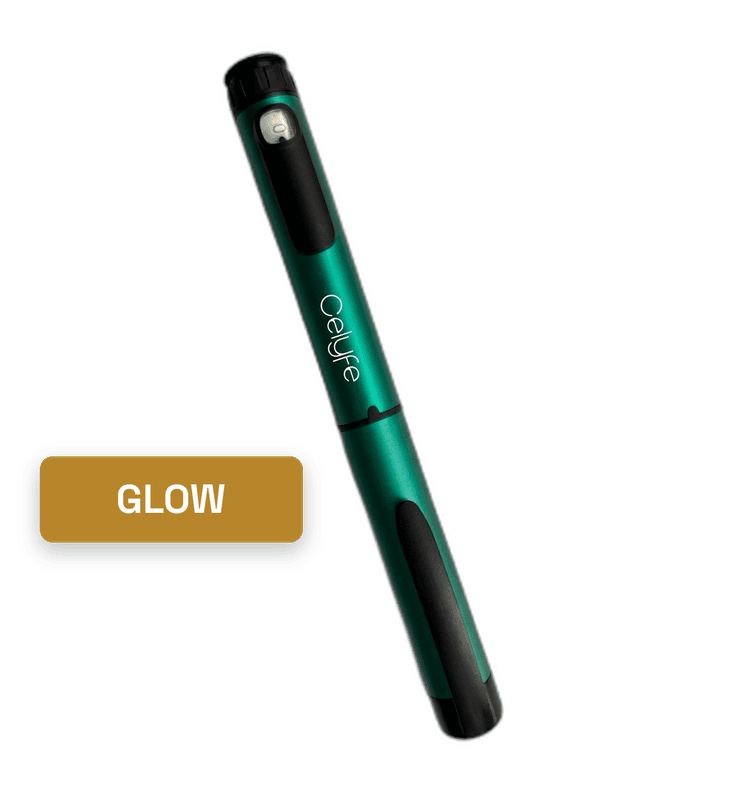
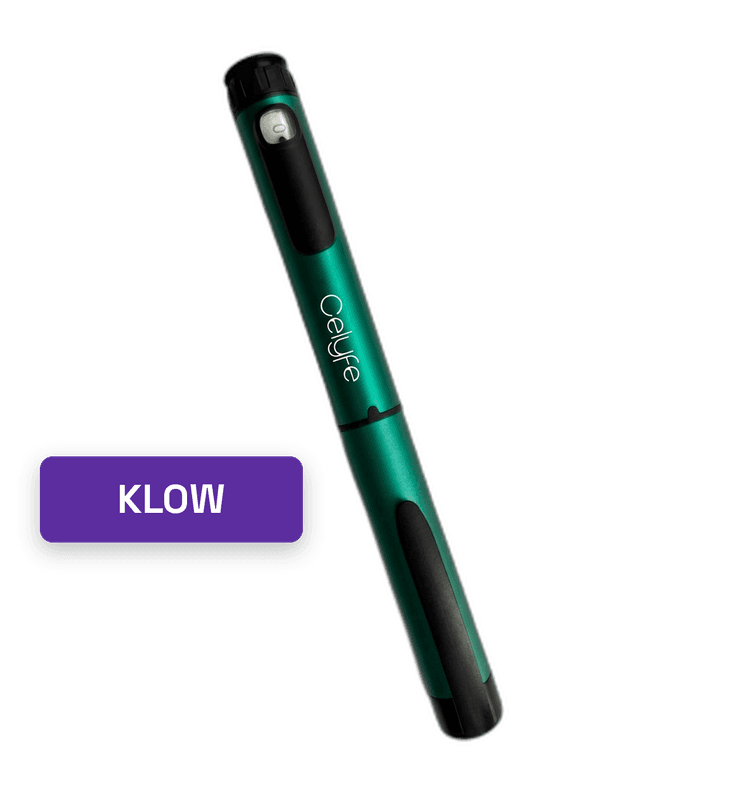
GHK-Cu is carried in two Celyfe pens, each a pre-filled, pre-mixed 3ml cartridge dispensing 0.01ml per click across 300 clicks. Certificates for the GLOW and KLOW pens are being re-issued and are not yet published, so no GLOW or KLOW test result is claimed here.
- GLOW Pen: GHK-Cu 75mg with BPC-157 15mg and TB-500 15mg, 105mg in total, 0.350mg per click.
- KLOW Pen: the same three plus KPV 15mg, 120mg in total, 0.400mg per click.
- The WOLVERINE Pen, the two-peptide base of BPC-157 and TB-500, does not contain GHK-Cu.
What the research literature covers
Both the GLOW and KLOW product pages list an International Journal of Molecular Sciences article titled Regenerative and Protective Actions of the GHK-Cu Peptide in the Light of the New Gene Data. The GLOW page also lists a Biomolecules review titled Peptides: Emerging Candidates for the Prevention and Treatment of Skin Senescence: A Review. The guide describes the field as cell and tissue culture work, largely in fibroblast models, on collagen and the extracellular matrix, together with gene-array studies that measure how exposure to GHK-Cu changes patterns of gene activity in cultured cells.
The GLOW product FAQ addresses the obvious question directly: GHK-Cu appears in the collagen and extracellular-matrix literature, which is where the GLOW name comes from, but the page describes composition, format and handling only and makes no cosmetic or therapeutic claim. Every Celyfe pen is supplied for in-vitro research use only.
Handling, storage and quality
GHK-Cu pens are pre-mixed solutions, so they are refrigerated at 2 to 8 degrees Celsius, kept sealed and protected from light, and never frozen. One handling note is specific to this compound: the copper complex prefers a near-neutral solution, so the GLOW and KLOW product pages advise diluting into a buffer rather than an acid to preserve the complex. Check the batch certificate for the recorded appearance and storage window of the lot.
A certificate of analysis for a combination pen should report a separate result for each component present. Certificates for the GLOW and KLOW pens are being re-issued and are not yet published, so no GLOW or KLOW test result is claimed here. A certificate is a chemical quality record for the formulation as manufactured, not a statement about any combined effect of the components.
Key takeaways
- •Copper Tripeptide-1 (GHK-Cu) is a peptide.
- •Library note: Copper-binding tripeptide studied in tissue and cellular research models.
- •Carried in: GLOW Pen, KLOW Pen at 75mg per pre-filled 3ml cartridge.
- •GHK-Cu is a regulated compound - this page is educational, not medical advice.
This page is informational and not medical advice. GHK-Cu is a regulated compound. Celyfe pens are supplied strictly for in-vitro laboratory research and nothing here is guidance on use in humans or animals.
At a glance
- Class
- Peptide
- Full name
- Copper Tripeptide-1 (GHK-Cu)
- Per cartridge
- 75mg
- Format
- Pre-filled 3ml pen cartridge
Role in the library
Copper-binding tripeptide studied in tissue and cellular research models.
Used in
Compared with
Frequently asked questions
Sources
- GLOW Pen (product page)
- KLOW Pen (product page)
- NAD+ Precision Pen (product page)
- Guide: What is GHK-Cu?
- Guide: What is the GLOW Pen?
- Guide: What is the KLOW Pen?
- Guide: How to store research peptides
- Guide: What is a certificate of analysis?
- Compare: GHK-Cu vs BPC-157
- Compare: WOLVERINE Pen vs GLOW Pen
- Compare: GLOW Pen vs KLOW Pen
- Regenerative and Protective Actions of the GHK-Cu Peptide in the Light of the New Gene Data (International Journal of Molecular Sciences)
- Peptides: Emerging Candidates for the Prevention and Treatment of Skin Senescence: A Review (Biomolecules)
Related peptide compounds