

BPC-157 is a synthetic pentadecapeptide, a fifteen-amino-acid chain derived from a protein sequence found in human gastric juice, and it is the most widely carried peptide in the Celyfe range. It appears at 15mg per 3ml cartridge in the WOLVERINE, GLOW and KLOW pens, all on sale now. This page covers its structure, how the pens carry it, what the listed literature covers and how it compares with TB-500 and GHK-Cu.
What is BPC-157?
BPC-157 is a synthetic peptide of fifteen amino acids with the sequence Gly-Glu-Pro-Pro-Pro-Gly-Lys-Pro-Ala-Asp-Asp-Ala-Gly-Leu-Val. Its formula is C62H98N16O22, molecular weight 1419.5 g/mol, CAS number 137525-51-0. BPC stands for body protection compound, the name given to the gastric-juice protein from which the fragment was identified. The fragment was isolated because, unlike most peptides, it is unusually resistant to degradation in gastric fluid.
It is manufactured by solid-phase peptide synthesis, the standard route for research peptides, rather than extracted from tissue. Peptides of this kind are typically characterised by HPLC for purity and by mass spectrometry or a reference standard for identity. The published WOLVERINE certificate (batch C26071, a third-party HPLC report from Analiza Białek on a sample Celyfe supplied) reports 99% purity for each peptide and a measured content of about 91% of label for BPC-157 and 85% for TB-500; it does not include mass spectrometry. The guide What are research peptides? explains the synthesis and testing in more detail.
How BPC-157 is used in the Celyfe system
Celyfe supplies BPC-157 only in combination, never as a single-compound pen. It is present at 15mg per pre-filled 3ml cartridge in three formulations that build on each other. Each pen ships pre-mixed and dispenses 0.01ml per click across 300 clicks. The published WOLVERINE certificate (batch C26071, a third-party HPLC report from Analiza Białek on a sample Celyfe supplied) reports 99% purity for each peptide and a measured content of about 91% of label for BPC-157 and 85% for TB-500; it does not include mass spectrometry. Certificates for the GLOW and KLOW pens are being re-issued and are not yet published, so no GLOW or KLOW test result is claimed here.
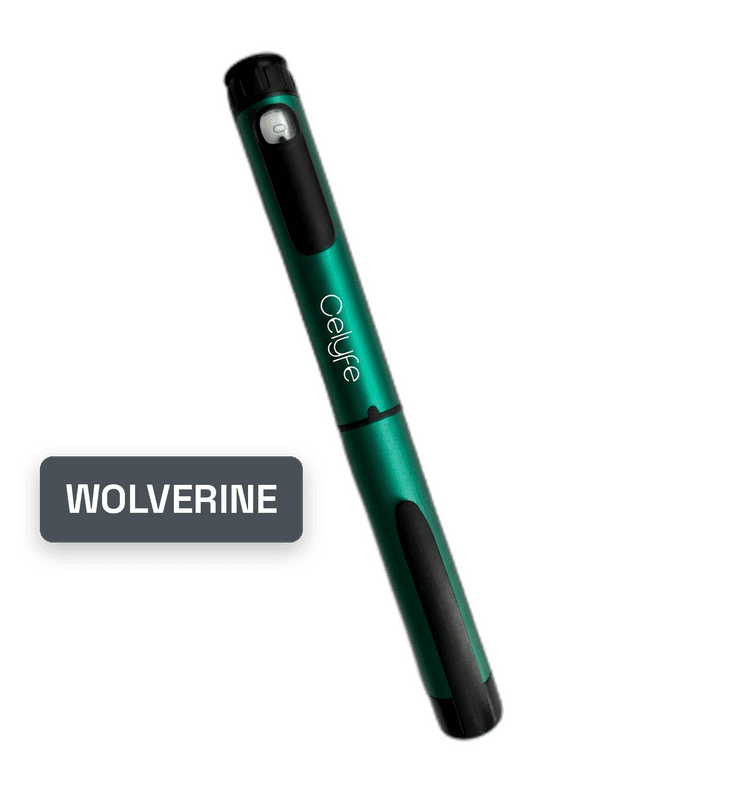
- WOLVERINE Pen: BPC-157 15mg and TB-500 15mg, 30mg in total, 0.100mg per click. The two-peptide base and the control arm for GLOW and KLOW study designs.
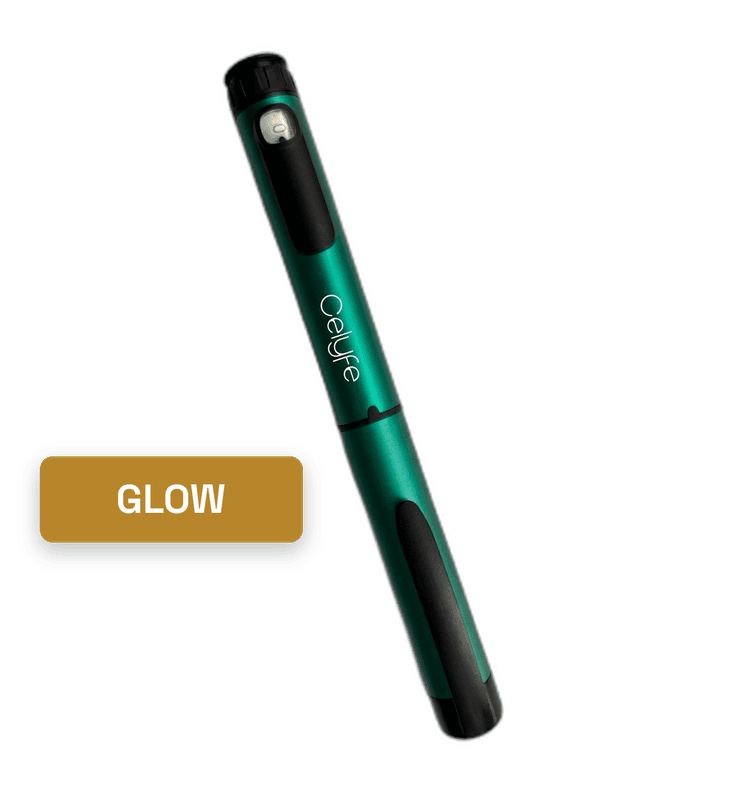
- GLOW Pen: the same two plus GHK-Cu 75mg, 105mg in total, 0.350mg per click.
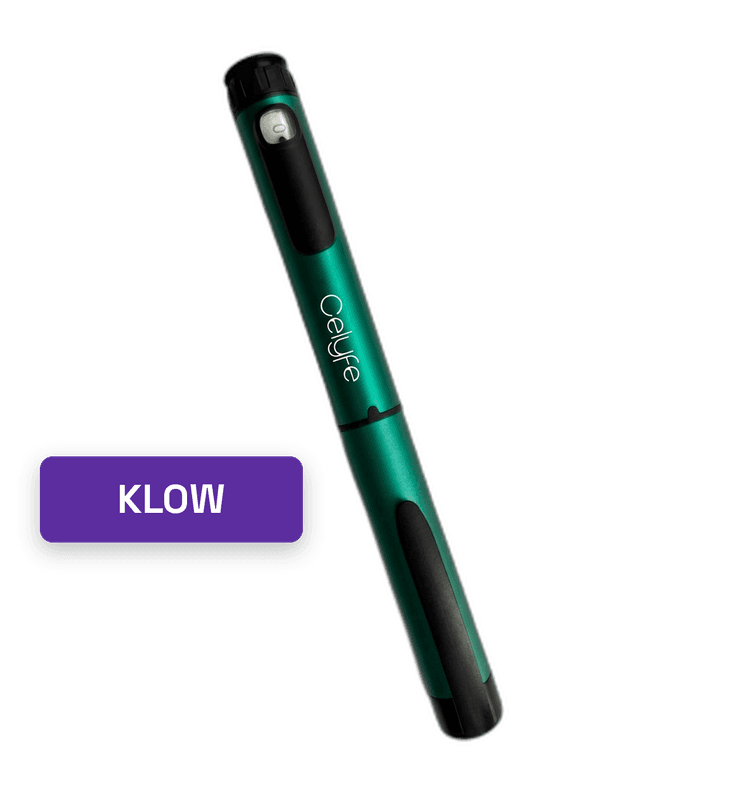
- KLOW Pen: the GLOW set plus KPV 15mg, 120mg in total, 0.400mg per click.
What the research literature covers
The sources below include a 2025 literature and patent review of BPC-157 (Jozwiak et al., Pharmaceuticals) and a 2025 Arthroscopy editorial commentary, Injectable Therapeutic Peptides - An Adjunct to Regenerative Medicine and Sports Performance?, which is an opinion piece rather than a study. The guide What is BPC-157? describes the published work as cell-culture and animal-model studies of signalling pathways including angiogenesis and growth-factor signalling such as VEGF.
That literature is preclinical. It describes what has been observed under laboratory conditions and does not establish an effect in humans. BPC-157 is not an approved medicine anywhere, and every Celyfe pen is supplied and labelled for in-vitro research use only.
Handling, storage and quality
All three BPC-157 pens are pre-mixed solutions, so they are refrigerated at 2 to 8 degrees Celsius and never frozen. Freeze-thaw cycling damages peptides already in solution. Keep the cartridge sealed and protected from light, prime the pen before first use and use aseptic technique. Because there is no reconstitution step, no bacteriostatic water is needed, which removes the handling errors described in the bacteriostatic water guide.
A batch-specific certificate for a combination pen should report separate identity and purity results for each peptide rather than a single blended figure. The COA guide sets out what to look for on the document.
Legal position in the UK
Research peptides such as BPC-157 are not controlled drugs in the UK and can be bought and possessed for laboratory research. What UK law regulates, through the Human Medicines Regulations 2012 and the MHRA, is selling or marketing a substance as a medicine for human use. Celyfe supplies BPC-157 strictly for research and makes no therapeutic claim. The guide Are peptides legal in the UK? is general information, not legal advice.
Key takeaways
- •Body Protection Compound 157 (BPC-157) is a peptide.
- •Library note: Synthetic pentadecapeptide used in peptide-signalling research.
- •Carried in: GLOW Pen, KLOW Pen, WOLVERINE Pen at 15mg per pre-filled 3ml cartridge.
- •BPC-157 is a regulated compound - this page is educational, not medical advice.
This page is informational and not medical advice. BPC-157 is a regulated compound. Celyfe pens are supplied strictly for in-vitro laboratory research and nothing here is guidance on use in humans or animals.
At a glance
- Class
- Peptide
- Full name
- Body Protection Compound 157
- Per cartridge
- 15mg
- Format
- Pre-filled 3ml pen cartridge
Role in the library
Synthetic pentadecapeptide used in peptide-signalling research.
Used in
Compared with
Frequently asked questions
Sources
- WOLVERINE Pen (product page)
- GLOW Pen (product page)
- KLOW Pen (product page)
- NAD+ Precision Pen (product page)
- Guide: What is BPC-157?
- Guide: What is the WOLVERINE Pen?
- Guide: What are research peptides?
- Guide: How to store research peptides
- Guide: Bacteriostatic water and peptide stability
- Guide: What is a certificate of analysis?
- Guide: Are peptides legal in the UK?
- Compare: BPC-157 vs TB-500
- Compare: GHK-Cu vs BPC-157
- Compare: BPC-157 vs Thymosin Alpha-1
- DeFoor MT et al. Injectable Therapeutic Peptides - An Adjunct to Regenerative Medicine and Sports Performance? (Arthroscopy, 2025, editorial commentary)
- Jozwiak M et al. Multifunctionality and possible medical application of the BPC 157 peptide: literature and patent review. Pharmaceuticals, 2025. PMID 40005999
Related peptide compounds