

Compare · 11 comparisons
Compare
Compound against compound, pen against pen - what each does, how it is supplied, and which goal it fits. No spin, just the data.
Compound comparisons
 VS

Lion's Mane vs Alpha-GPC
Lion's Mane vs Alpha-GPC: which cognitive compound?
They work on different pathways. Lion's Mane is a nootropic mushroom extract studied for its relationship to nerve growth factor (NGF); Alpha-GPC is a choline compound studied as a precursor in acetylcholine synthesis. They are read together, not as either-or.
READ THE COMPARISON- VS
Lion's Mane vs Bacopa Monnieri
Lion's Mane vs Bacopa Monnieri for focus?
Both sit in the cognitive layer of the Celyfe compound library. Lion's Mane is a nootropic extract studied for its relationship to NGF; Bacopa Monnieri is an adaptogenic herb studied in memory and learning research. Different mechanisms.
READ THE COMPARISON - VS
Alpha-GPC vs Phosphatidylserine
Alpha-GPC vs Phosphatidylserine: how do they differ?
Alpha-GPC is a choline compound studied as a precursor in acetylcholine synthesis; Phosphatidylserine is a phospholipid studied for cell membrane integrity in neural tissue. Distinct, complementary roles.
READ THE COMPARISON  VS

BPC-157 vs Thymosin Alpha-1
BPC-157 vs Thymosin Alpha-1: two peptides compared
Both are peptides but target different systems. BPC-157 is a synthetic pentadecapeptide used in peptide-signalling research; Thymosin Alpha-1 is a peptide studied in immune-modulation and T-cell research. Both are regulated compounds - this comparison is educational only.
READ THE COMPARISON VS
NAD+ vs Resveratrol
NAD+ vs Resveratrol: coenzyme or activator?
They occupy different points on the same pathway. NAD+ is the active coenzyme itself, supplied directly rather than as a precursor; Resveratrol is a polyphenol studied as a sirtuin activator alongside NAD+. In the NAD+ Precision Pen they are carried together in one pre-filled cartridge.
READ THE COMPARISON VS

Curcumin vs Astaxanthin
Curcumin vs Astaxanthin in a recovery stack?
Two recovery-layer compounds with distinct roles. Curcumin is a polyphenol studied in inflammatory-response research; Astaxanthin is a carotenoid included as a potent antioxidant. Complementary, not interchangeable.
READ THE COMPARISON VS

EGCG vs Quercetin
EGCG vs Quercetin: two plant compounds compared
Both sit in the immune-support layer of the Celyfe compound library. EGCG is a green tea catechin with antioxidant properties; Quercetin is a flavonoid studied in immune and inflammatory-response research. Different plant classes.
READ THE COMPARISON- VS
BPC-157 vs TB-500
BPC-157 vs TB-500: what is the difference?
Both are research peptides carried together in the Celyfe WOLVERINE and GLOW pens. BPC-157 is a synthetic pentadecapeptide used in peptide-signalling research; TB-500 is a thymosin beta-4 fragment studied for actin and cytoskeletal dynamics. They are studied as a dual-peptide pair, not as one-versus-the-other.
READ THE COMPARISON  VS
GHK-Cu vs BPC-157
GHK-Cu vs BPC-157: how do they differ?
GHK-Cu is a copper-binding tripeptide studied in tissue and cellular research models; BPC-157 is a synthetic pentadecapeptide used in peptide-signalling research. In the Celyfe GLOW and KLOW pens they appear together rather than as alternatives - different sequences on different pathways in one research set.
READ THE COMPARISON
Pen comparisons
 VS
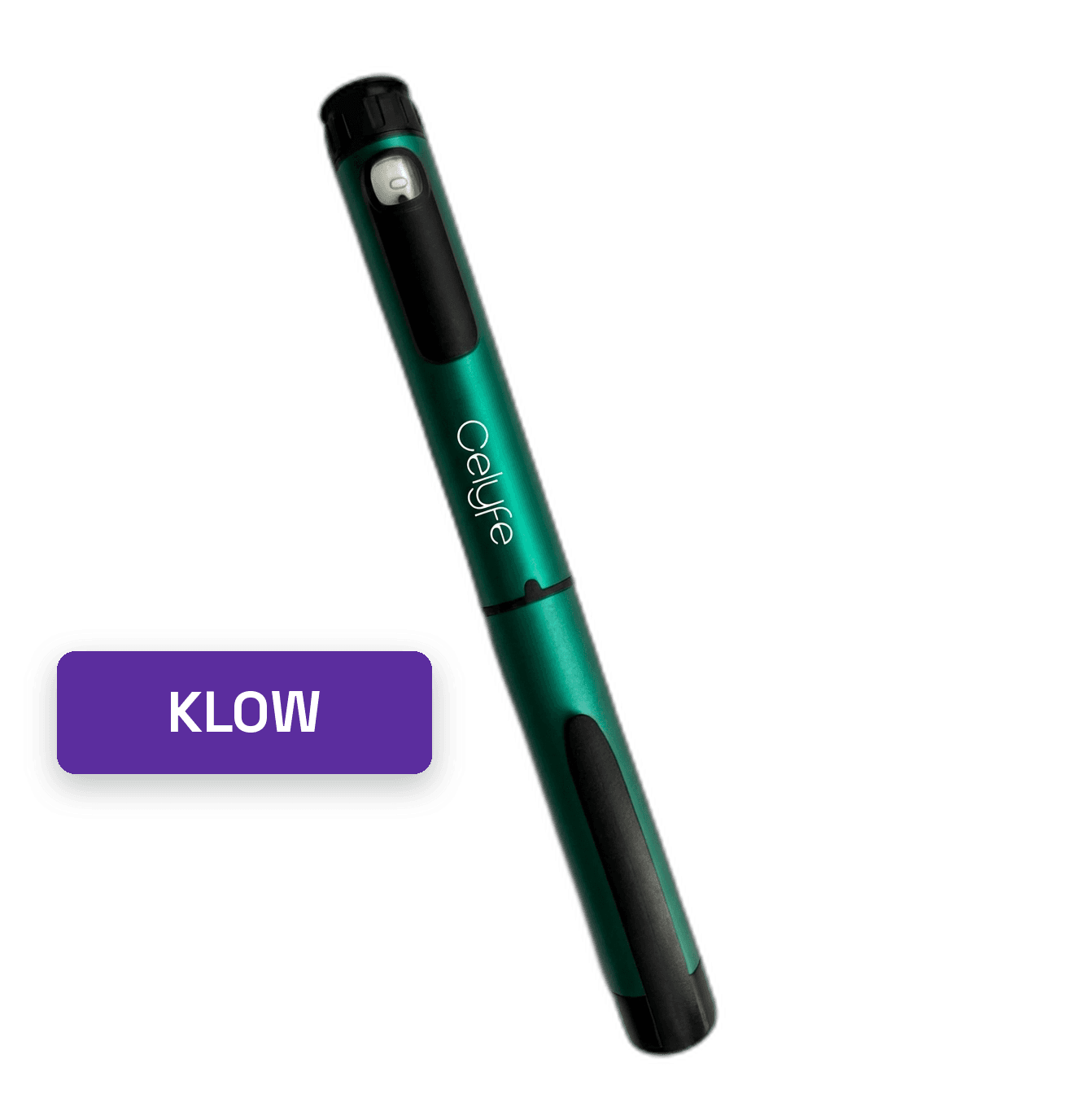
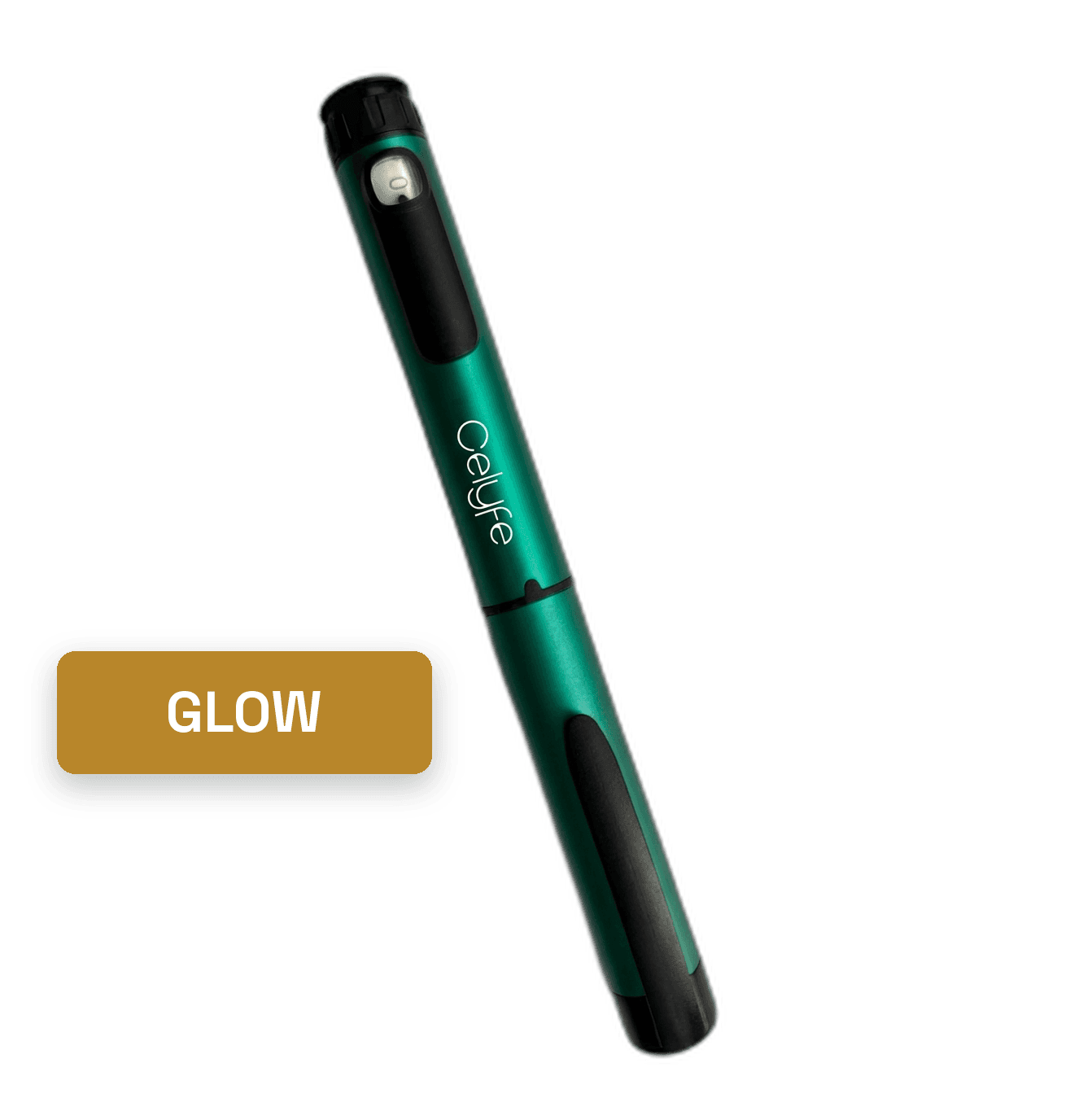
GLOW Pen vs KLOW Pen
GLOW Pen vs KLOW Pen: which formulation?
The GLOW Pen carries GHK-Cu, BPC-157 and TB-500 (105mg total). The KLOW Pen is the same three compounds plus KPV (120mg total). KLOW is GLOW with an added alpha-MSH fragment for a four-pathway research set; GLOW is the three-compound version.
READ THE COMPARISON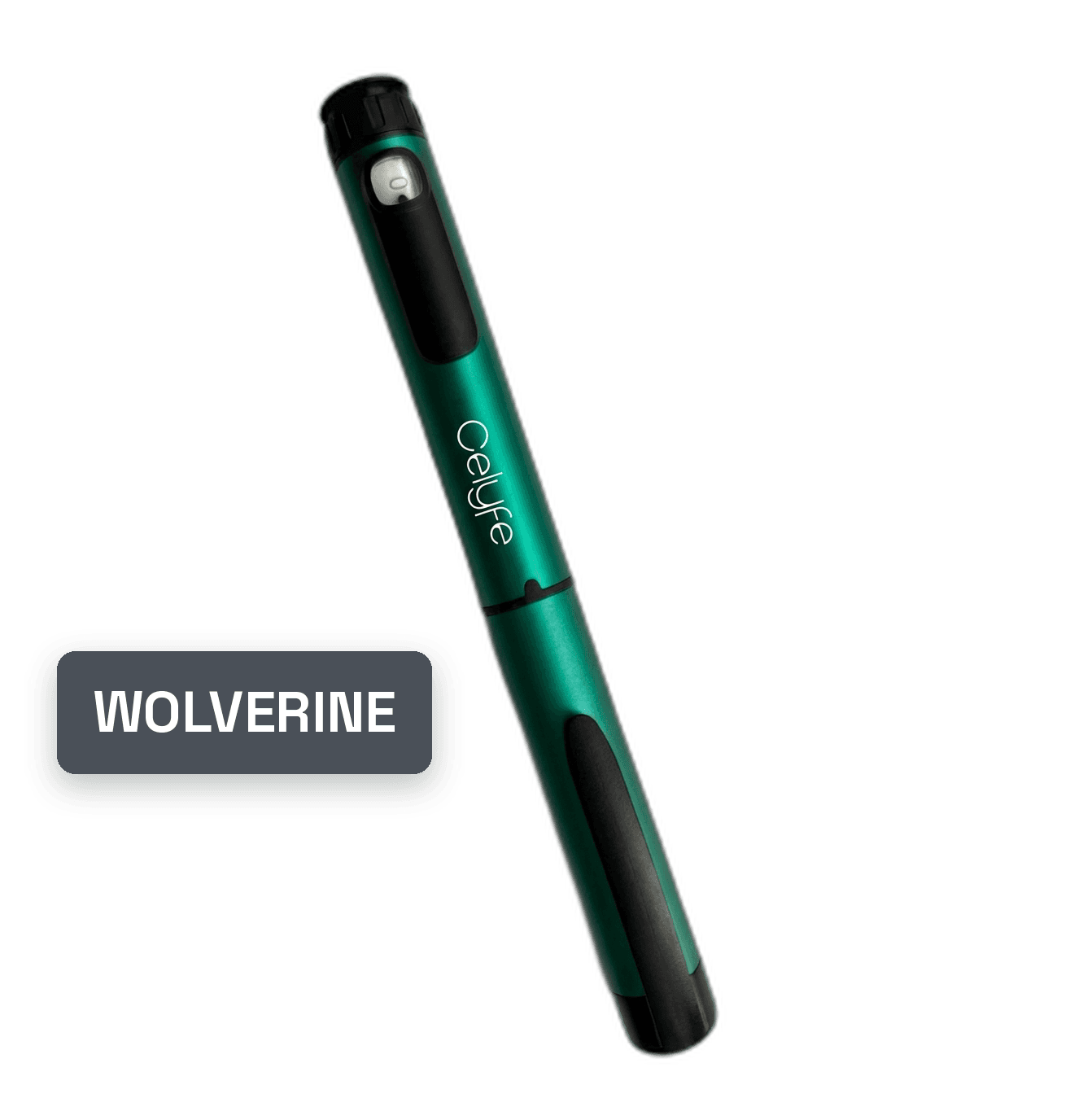 VS
WOLVERINE Pen vs GLOW Pen
WOLVERINE Pen vs GLOW Pen: which stack?
The WOLVERINE Pen is a two-peptide research pair (BPC-157 and TB-500, 30mg total). The GLOW Pen adds GHK-Cu on top (105mg total). WOLVERINE is the focused dual-peptide device; GLOW is the broader three-compound formulation.
READ THE COMPARISON